

You are here
Barnahus inaugural study day opened by Uachtarán na hÉireann Catherine Connolly
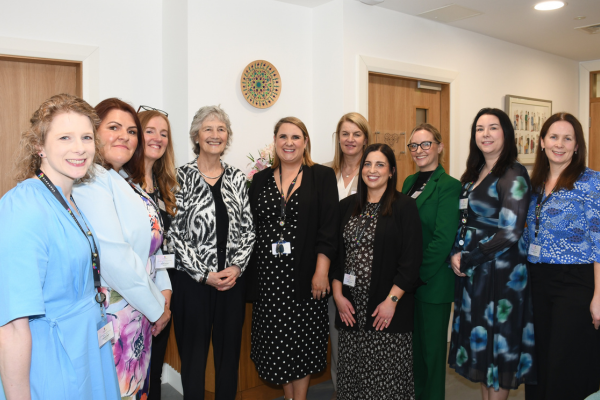
The first Barnahus study day to take place nationally was held on Thursday 14 May, in Galway. The event, opened by President Catherine Connolly was a collaboration between the four principal agencies involved in Barnahus; HSE, Tusla, An Garda Síochána and Children’s Health Ireland and brought together leading practitioners involved in responding to child sexual violence.
Barnahus is a European model which provides a safe and child-friendly place where a team of trained professionals work together with the child and family when there is a concern or disclosure of child sexual abuse. The agencies responsible for child protection, criminal investigation, medical care, and therapy services collaborate in the same location, to deliver a coordinated response which is guided by the child’s best interests.
Barnahus West commenced in 2019 and in 2022 moved into a purpose built, child-centred facility in Galway city. The Hazel Clinic @Barnahus West is the only paediatric forensic medical service in the country which is available on a 24/7 basis. A team of specially trained doctors, nurses, Gardaí, social workers and therapists are co-located at the Galway unit.
The aim of the study day, which was attended by over 200 participants, was to share learnings and best practice in responding to child sexual exploitation.
Speaking at the event, President Catherine Connolly said; “Barnahus exists because we have learned, at terrible cost, what happens when children are not believed, when reporting is fragmented, when investigation is slow and uncoordinated, when therapeutic support comes too late or not at all, when the systems that should have surrounded a child are absent or obstructive. The model is, in a sense, a structural answer to both a structural and a moral failure.
“You meet children at the moment when they are most in need of professional, careful, sustained attention, and a child remembers, for the rest of their life, how they were treated at that moment.
“According to a 2022 Central Statistics Office report on sexual violence, 29 percent of Irish adults reported experiencing sexual violence as a child. Women reported experiencing it at a higher level than men (36 percent versus 22 percent). The figure rises to 41 percent of adults among 18–24 year-olds, indicating a particularly high prevalence among younger adults. In 2023, we saw record-high levels of child protection referrals – almost 92,000 sent to Tusla, the Child and Family Agency. Approximately 5,500 of these were referrals for child sex abuse.
“In the face of these figures, your work is all the more difficult and all the more important. These figures are not abstract. They are the measure of what brings every person in this room to work each morning, and why the quality of that work matters so profoundly.”
Dr Joanne Nelson, Clinical Director of HSE Child and Adolescent Sexual Assault Treatment Service said; “I wish to extend my sincere thanks to President Catherine Connolly for visiting Barnahus West today, for opening our inaugural study day and for her inspiring words. I also would like to thank our wonderful panel of speakers who have shared their expertise and insights throughout the day.”
Chief Superintendent Gerard Roche, Galway Garda Division, said: “The Barnahus model represents a clear, evidence based commitment to putting the voice of the child at the centre of our response. It brings together forensic, medical, therapeutic, and child protection expertise in a single, child friendly setting. For An Garda Síochána, Barnahus is not an optional extra – it is a fundamental part of how we must investigate, protect, and support. It reduces retraumatisation, improves the quality of evidence, and strengthens the chances of achieving justice while prioritising the child’s welfare.
Tusla’s Chief Social Worker Ger Brophy commented; “We were delighted to welcome President Catherine Connolly to visit Barnahus West today and demonstrate the commitment from professionals across the child protection, criminal investigation and healthcare to provide a multidisciplinary and coordinated response for any children who may have experienced sexual abuse. The Barnahus model is based on the principle that interagency collaboration at the earliest opportunity will improve outcomes for children who may have experienced sexual abuse.
“Events such as this promote the co-ordinated input of Tusla, the HSE/SATU, An Garda Síochána and Barnahus therapy practitioners to promote children’s wellbeing by ensuring that their safety, physical, and emotional needs are met, and that they are provided with access to justice. Barnahus is a child-centred model which makes the reporting process easier for the child and has the child’s safety and wellbeing at its core.”
A case study presented by the Barnahus West team centred on a child’s journey through the service told through the eyes of “Jess”, an eleven year old victim of sexual assault. In the anonymised case the key steps in the Barnahus journey were outlined. From an initial referral to a multidisciplinary inter-agency meeting to specialist interviews, forensic medical examination, safety planning, criminal investigation and therapy.
Jess’s story is one example of how Barnahus brings together professionals from across disciplines to provide a coordinated, child-centred response. This integrated approach ensures that children receive the care, protection, and justice they deserve, all under one roof. It’s not just about what happened, it's about how services respond, together.
Speakers at the first Barnahus Study Day included; Ms Shawnna von Blixen-Finecke, Deputy Secretary General, Barnahus Europe; Mr JP O’Sullivan, MECPATHS; Dr Aisling Geoghegan, Consultant Paediatrician, Children’s Health Ireland; Detective Sergeant Catherine Curtin, Online Child Exploitation Unit and Dr Olive Moloney, Senior Clinical Psychologist, Barnahus South.
The panel were joined by Barnahus West representatives who gave an interagency case presentation; Ms Aisling Heskin, TUSLA Social worker, Dr Joanne Nelson, CASATS Clinical Director, Detective Inspector Fergus Gaughan, DPSU Galway, Detective Garda Linda Cusack DPSU Galway and Ms Niamh O’Loughlin Social Work Team Leader Barnahus West.
The article above is specific to the following Saolta hospitals::
University Hospital Galway (UHG)